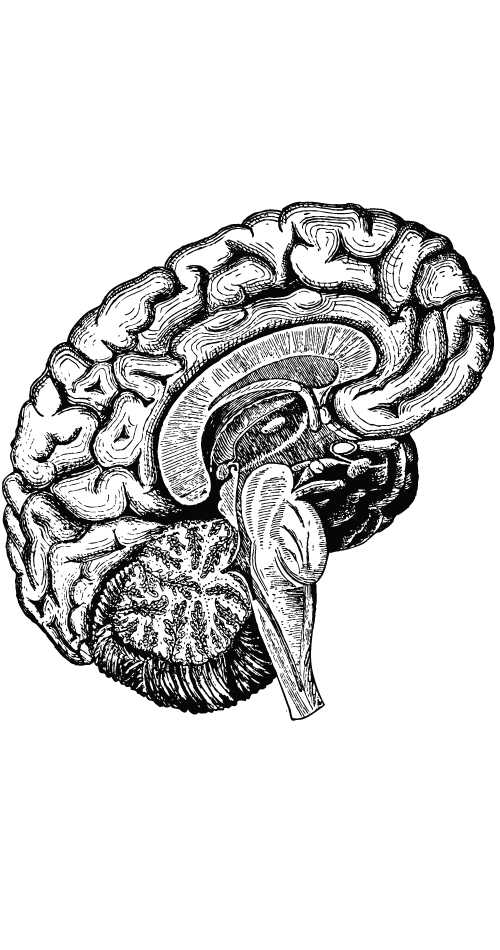
Evidence of relationship between neurobehavioral & microbiota-gut-brain axis.
It has been established that the gut contains about 100 billion neurons corresponding to the largest number of neurons outside of the brain, which have similar functions to the brain. This group of gutˈs neurons are known as the gut’s brain or the enteric nervous system and it is located in the sheaths of tissue lining the esophagus, stomach, small and large intestine.
The brain and the enteric nervous system are connected bi-directionally. The intestine receives information from the brain, and intestine in turn sends messages to the brain. This communication between the brain and the gut is known as gut-brain axis (GBA). The brain sends information to the intestine through nerve pathways, such as the vagus nerve, but also through various chemical substances that travel through the bloodstream. The mechanisms underlying GBA communications involve hormones and neuro-immuno-endocrine mediators. The bidirectional communication between the gut and brain is necessary for the proper functioning of both organs.
GBA is a complex communication system that ensures the proper maintenance of gastrointestinal function and have multiple effects on affect, motivation, and higher cognitive functions. The role of GBA is to monitor and integrate gut functions and its connection with emotional and cognitive centers of the brain with peripheral intestinal functions and mechanisms such as immune activation, intestinal permeability, enteric reflex, and entero-endocrine signaling. Typical examples of this bidirectional circuit correspond to the increased intestinal peristalsis (cramps and diarrhea) when the brain perceives danger or the satiety perceived when ingested a certain amount of food, among others.
The enteric nervous system, also has its own ecosystem, the intestinal flora. Microbiota or intestinal flora are a group of microorganisms in the intestine that have various functions such as protection from harmful microbes, the absorption and incorporation of nutrients, the synthesis of vitamins and the elimination of toxic or carcinogenic substances. In addition to these functions, it has also been shown that intestinal microbiota is involved in the communication between the gut and brain. This communication is known as microbiota-gut-brain axis (MGBA).
The gut-brain axis is a functional unit that can be affected by alterations associated with changes in the composition of the intestinal microbiota.
In healthy individuals, communication between gut and brain is constant, allowing, for example, regulation of satiety, among others important functions.
At present, intensive investigations are underway to determine the relationships and effects between microbiota-gut-brain axis on welfare and health.1
Clinical studies have shown that chronic gastrointestinal infections lead to malnutrition and stunting, resulting in impaired cognitive function.
Evidence suggests that both pathogens as friendly microbiota, exert effects on gut function and host’s behavior. Several clinical studies have demonstrated changes in behavior and brain chemistry after administration of antibiotics.
So, the study of relationship microbiota-gut-brain provides oportunities to study of chronic gastrointestinal and psychiatric disorders and a new therapeutic approach.
Also, it has been studied the relationship between microbiota and Autism Spectrum Disorders (ASD).
ASD is a complex group of disorders of brain development characterized by social and communication impairment along with presence of repetitive and restrictive behaviors. Investigations suggest that there may be a close relationship between the quality and quantity of the microbiota and theCentral Nervous System (CNS) function. Also, this effectmay be related with the immune system and circulating levels of pro-inflammatory and anti-inflammatory cytokines.
The friendly microbiota produces metabolites, particularly, short chain fatty acids (SCFAs)that modulate the immune system and the sympathetic nervous system.In such a manner themaintaining a healthy microbiota can be an effective therapeutic approach to improve ASD symptoms.2
Several studies continue to show the importance of maintaining healthy intestinal flora. Every time there are more evidence that intestinal bacteria could play a crucial role in the induction of anxiety and depression. In fact, it is known that these microorganisms are involved in anxiety, dementia, mood disorder, roasted and pain perception and even the emotional response of animals.3
Also, it has been studied the relationship between microbiota and Autism Spectrum Disorders (ASD).
ASD is a complex group of disorders of brain development characterized by social and communication impairment along with presence of repetitive and restrictive behaviors. Investigations suggest that there may be a close relationship between the quality and quantity of the microbiota and the Central Nervous System (CNS) function. Also, this effect may be related with the immune system and circulating levels of pro-inflammatory and anti-inflammatory cytokines.
The friendly microbiota produces metabolites, particularly, short chain fatty acids (SCFAs) that modulate the immune system and the sympathetic nervous system. In such a manner the maintaining, a healthy microbiota can be an effective therapeutic approach to improve ASD symptoms. For this reason, maintaining the balance of the microbiota can be a strategy to improve the symptoms of various diseases associated with mental health.

References
1 a) Cheng C, et al (2003). Coping strategies, illness perception, anxiety and depression of patients with idiopathic constipation: a population-based study. Aliment PharmacolTher; 18: 319-326; b) Mussell M, et al (2008). Gastrointestinal symptoms in primary care: prevalence and association with depression and anxiety. J Psychosom Res; 64: 605-612; c) Gros DF et al ( 2009). Frequency and severity of the symptoms of irritable bowel syndrome across the anxiety disorders and depression. J Anxiety Disord; 23: 290-296; d) Bercik Pet al. The effects of inflammation, infection and antibiotics on the microbiota-gut-brain axis. AdvExp Med Biol. 2014;817:279-89.
2 a) MangiolaFetal.Gut microbiota in autism and mood disorders. World J Gastroenterol. 2016 Jan 7;22(1):361-8; b) Santocchi E et al. Gut to brain interaction in Autism Spectrum Disorders: a randomized controlled trial on the role of probiotics on clinical, biochemical and neurophysiological parameters. BMC Psychiatry. 2016 Jun 4;16:183; c) MangiolaFetal.Gut microbiota in autism and mood disorders. World J Gastroenterol. 2016 Jan 7;22(1):361-8.
3 Santocchi E et al. Gut to brain interaction in Autism Spectrum Disorders: a randomized controlled trial on the role of probiotics on clinical, biochemical and neurophysiological parameters. BMC Psychiatry. 2016 Jun 4;16:183.